
Gallatin VINELink Release Coverage
VINE is a custody and case information notification service. Illinois is selectable in VINELink, but no authoritative participation list was found that proves a distinct Gallatin County jail feed. That fits the local custody structure: Gallatin officially has no operating jail, and Saline County Detention Center contract-houses Gallatin detainees. Search the actual person, then read the agency and facility named in the result.
If a participating record reports “released,” “out of custody,” or another event, preserve the exact label and date. The notice corroborates what that feeding agency sent. It does not show that another county, IDOC, USMS, BOP, or ICE lacks a hold. For an old or formal question, request the booking and release entry from the agency that held the person.
Search One Gallatin VINELink Record
Use VINELink for one known person, not as a countywide recent-release list. Name variants and common names can produce false matches or false no-results. Keep the exact search terms and time.
- Open VINELink and select Illinois.
- Choose the person-search option and enter the identifying data requested by the current form.
- Compare names, identifiers, agency, and facility before opening a record. Do not select a match on name alone.
- Read the exact custody status, location, and event date shown.
- If the record names Saline, confirm the event with Saline. If it names IDOC, compare the IDOC person record.
Gallatin arrest and court data may help with identity, while Saline maintains the physical booking and release record for a person held there. The full Gallatin released-inmate search path connects those separate sources when VINELink alone is not enough.
The official VINELink state-selection screen is the stable starting point for the Illinois search.
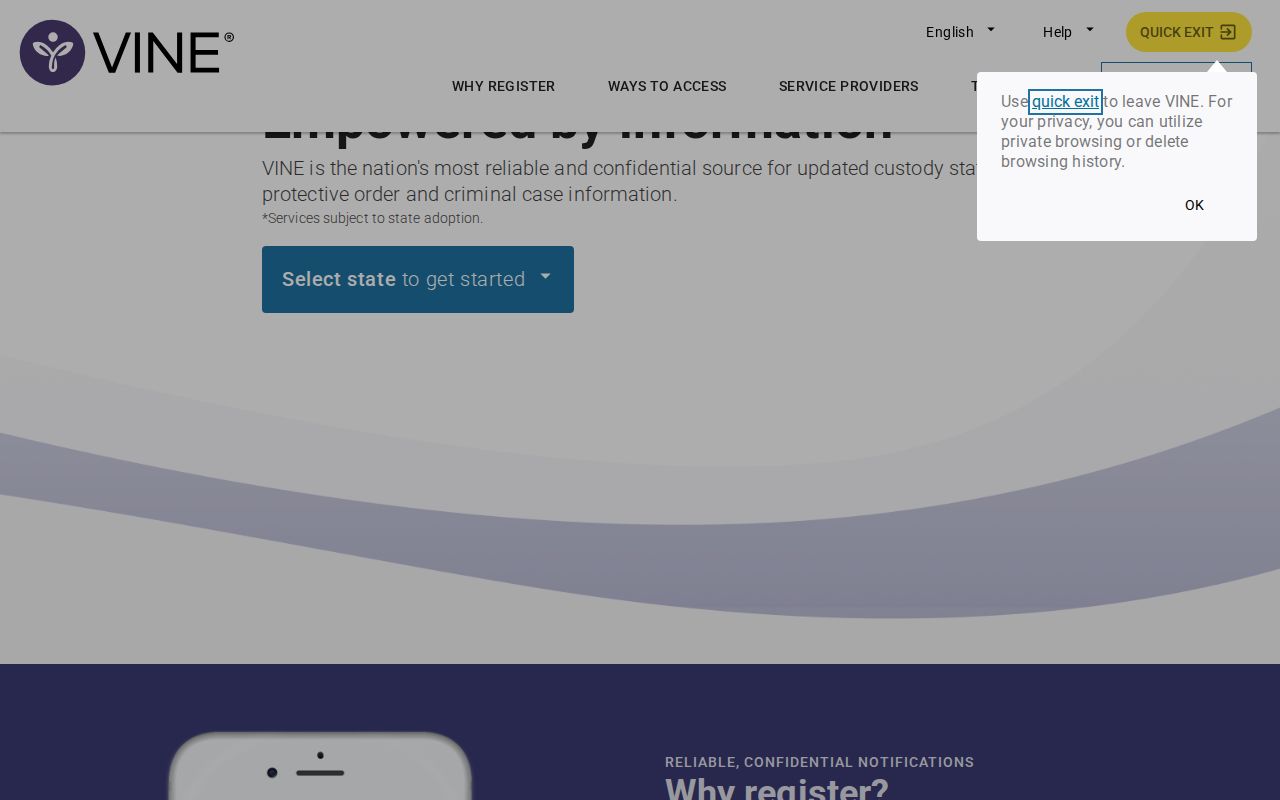
After choosing Illinois, verify the person and feeding agency before registering for any event notice.
Gallatin VINELink Release Fields
The live record controls. Field names can differ by agency and record type, so do not add a date or photo that is absent. These are the key items to capture when displayed.
| Item | How to read it |
|---|---|
| Agency or facility | Identifies the source feeding the custody event |
| Custody status | States the source system’s current label |
| Event and date | Shows a reported release, transfer, or other custody change when supplied |
| Record identifier | Helps match and confirm the person with the custodian |
| Notification options | Lists the events and delivery channels available for that record |
A transfer is not community release. Likewise, disappearance from search results is not proof of release. VINELink is event-driven and is not a universal archive. For IDOC cases, read Offender Status, Location, Parole Date, and Projected Discharge Date in the state record as well.
The Illinois Attorney General VINE page describes the statewide victim-notification layer. Local confirmation still depends on the agency in the person’s result.
Register Gallatin Release Notifications
Registration is prospective. It asks VINELink to send an alert when a selected event is received for the correct record. It does not order a certified past release entry.
- Open the verified person record and select Register or notifications.
- Choose the offered custody events and language.
- Select an available phone, email, SMS/text, or in-app delivery method.
- Enter the destination and submit the registration.
- Complete the current confirmation flow. It may send a six-character code by text or email.
- Retain and manage a PIN if the phone workflow prompts for one.
Confirmation codes and PINs serve different live workflows. Do not assume every delivery method requires the same step. VINE offers round-the-clock live help at 1-866-277-7477 with multilingual assistance. Keep the registration current if contact details change.
Confirm Gallatin VINELink Releases
When the result names Saline County Detention Center, call 618-252-8661 and ask whether the event was a direct release or a transfer. If telephone confirmation is unavailable, request the booking/release entry with the date, disposition, releasing authority, and destination. Gallatin Sheriff can supply its own arrest and transport trail, but not a nonexistent Gallatin jail log.
For a state prison record, use the IDOC offender search. “PAROLE” and a parole district can support release from prison to supervision. “IN CUSTODY” means the person remains in IDOC custody. A future Projected Discharge Date is not an actual release event.
VINELink does not substitute for federal systems. BOP records federal prison custody, ICE ODLS is current-detention oriented, and no nationwide public USMS historical release locator was found. A no-result in any one system cannot prove community release.
Note: Save the alert’s exact agency, status, date, time, and identifier before asking the named custodian for confirmation.
Gallatin VINE Agency Matching
Gallatin’s local VINE issue is not merely a spelling problem. The Illinois Sheriffs’ Association identifies Gallatin County as having no jail, while state inspection material says Saline contract-houses Gallatin detainees. A search that assumes a Gallatin jail feed can therefore miss the physical custodian. The correct approach is to test the known person, inspect the named agency, and follow the custody chain.
If VINELink shows Saline, ask Saline whether the event was a direct release, a transfer, or another disposition. If the result shows IDOC, open the state offender record and compare the IDOC number, status, location, parole date, and projected discharge. If the alert names another county, federal authority, or contract holder, follow that source instead of forcing the event into Gallatin County.
A no-result has several possible meanings. The agency may not participate, the identifying data may differ, the record may no longer be available, or the person may be in a system VINELink does not cover. Try lawful spelling variants and compare dates, but do not treat absence as proof that release occurred. Call VINE help or the likely custodian when the agency is uncertain.
This local distinction is why the agency line matters as much as the status. A “released” event from one custodian does not exclude a transfer to another. Preserve the whole notice, not just the word released.
Gallatin Historical Release Proof
VINELink registration watches for future events. It is not a records request, and it does not create a certified release history. For a Gallatin arrest held at Saline, ask Saline for the existing booking and release record. Useful fields include booking number, intake time, arresting agency, release or transfer date and time, disposition, releasing authority, and receiving destination.
Gallatin Sheriff can be asked for its arrest, temporary custody, transport, or local release record. The Gallatin court docket can show dismissal, probation, sentencing, or a release order, but the clerk does not control the time Saline opened the door. An IDOC record controls state prison status. This source-by-source method prevents a VINE alert from being stretched beyond what the feeding agency reported.
For older events, save the query date, system, spelling, identifiers, and no-result limitation. Sealed, expunged, confidential, or incomplete records may affect public access. A concise request for an existing record is more effective than asking staff to reconstruct a narrative. Request electronic format and ask the public body to identify the legal basis for any withheld field.
Identity matching is vital when the notice is the first clue. Compare a date of birth, agency identifier, booking or IDOC number, sentencing county, and the order of events. A Saline transfer should normally come before an IDOC admission, although entry dates can differ. If the alert date conflicts with the jail or state record, do not guess which is correct. Preserve both and refer the conflict to the agencies.
Dynamic VINELink screens may produce session-based addresses. Save the stable entry URL and note the steps used to reach the result. Avoid keeping or sharing more personal data than the verification requires. For a lawful illustration, a state-selection screen is safer than a named person’s live result.
When an alert arrives, read or hear the full notice. Record the agency before acting on the status word. Phone recipients should keep a PIN when their registration uses one, since it may confirm calls or manage notices. Text and email users may instead encounter an account confirmation code. VINE help can explain the active delivery method without certifying the jail record.
Prompt notice can aid a personal safety or court-related need, but the source record remains essential. The holding facility can distinguish direct release from transfer. IDOC can distinguish prison release to parole from final discharge. That check keeps an alert within the scope of its actual agency event.
A sensible confirmation chain follows the notice. First, save the event without editing its wording. Next, call the agency or facility shown and ask which custody event the status represents. Then compare the court or IDOC record if the person moved into a different system. For a past event, send a focused request to the custodian rather than relying on an account screen that may later change. If staff reports no matching record, verify the identifiers and ask whether another named unit maintains it. A Gallatin no-record response may simply mean Saline created the booking. A Saline no-record response may mean release occurred before transport or under another authority.