
BOP Release Paths
The Federal Bureau of Prisons operates the federal prison system. A Gallatin County arrest does not enter BOP merely because federal officers later become involved. Saline County Detention Center has a documented USMS contract, so a federal detainee can remain in a local contract facility during pretrial, transport, or designation. USMS custody can come before a BOP placement. The holding facility and federal court record are therefore essential during that interval.
After federal commitment and BOP designation, the BOP Inmate Locator becomes the primary public person-search route. A later result marked “Released” or “Not in BOP Custody” supports departure from BOP. It does not establish a direct return to the Gallatin community. The person may be under federal supervised release, held by a state or county, transferred to immigration custody, or otherwise subject to another authority.
Confirm a BOP Release
Search by a federal identifying number when available. The locator also permits a name search with optional age, race, and sex fields. Compare every available identifier before treating a result as the same person. Names can collide. A suffix, middle name, prior surname, spelling variation, or transposition may also affect the result.
- Open the official BOP Inmate Locator.
- Choose number search or name search.
- Match the register number and profile fields.
- Read the Release Date and Location or status together.
- Preserve the exact result and the date checked.
- Follow another custodian when the case record names one.
The Gallatin County release-search guide covers the county and state branches that BOP cannot answer. If the federal result is missing, do not infer release. Check whether USMS, ICE, a contract jail, or another correctional system is the actual custodian.
BOP Locator Record Fields
The public locator covers federal inmates incarcerated from 1982 to the present. Research identified result fields for Name, Register Number, Age, Race, Sex, Release Date, and Location. The release date may be an actual past date or another displayed federal date depending on the record. BOP warns that dates can change during First Step Act and Federal Time Credit recalculation and recommends periodic checks.
| BOP field | Use in a release check |
|---|---|
| Name | Starting identity field, not enough alone |
| Register Number | Strong federal record identifier |
| Age, race, sex | Supporting match fields |
| Release Date | Date shown by the federal prison system |
| Location or status | Current BOP facility or departure language |
Record the wording exactly. “Not in BOP Custody” has a narrower meaning than “free.” It resolves only whether BOP currently holds the person. A federal court docket or supervision office may supply the post-prison context, while another locator may identify later custody.
BOP Release Search Image
The official BOP Inmate Locator is the stable public entry point for the federal prison search.
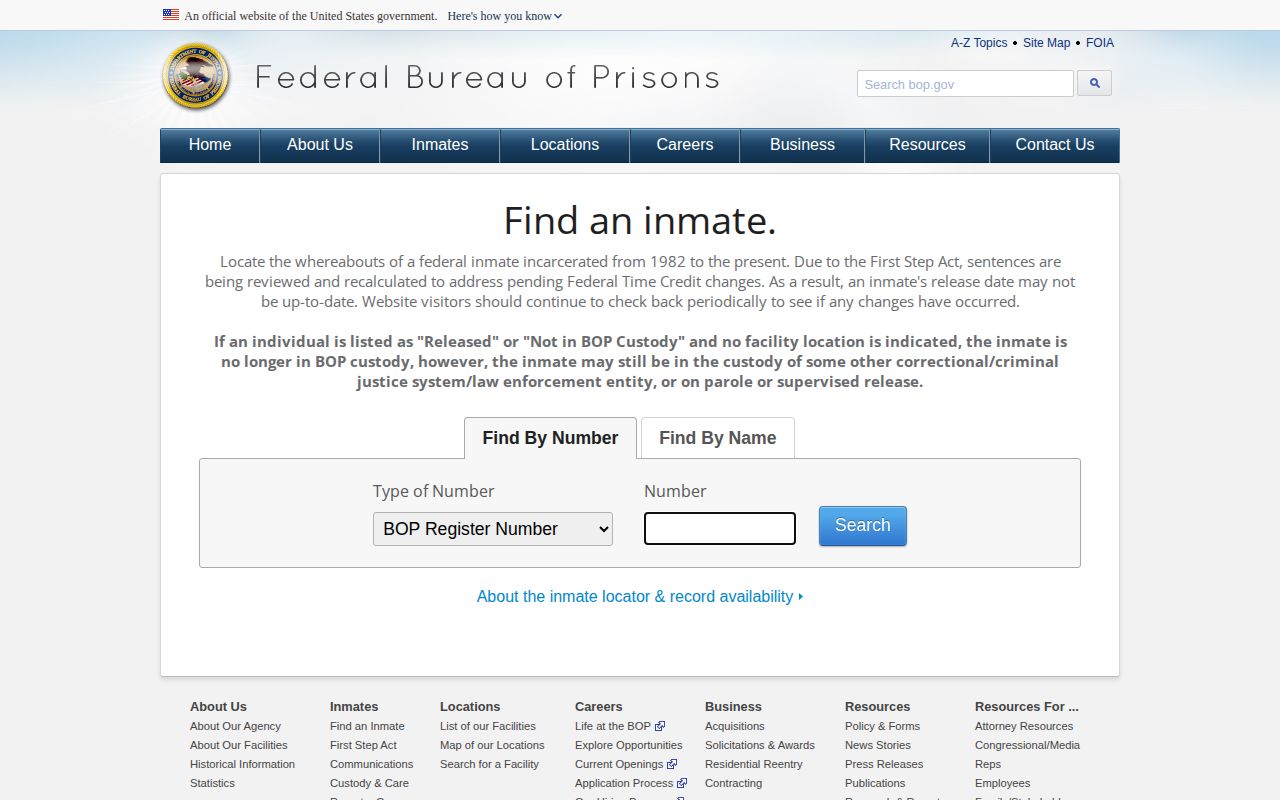
Dynamic search results may not have a durable public URL. Log the entry page, search date, fields entered, and exact outcome. Avoid publishing unnecessary personal details when saving a result for a lawful release verification. A redacted or minimized record can preserve the relevant status without exposing unrelated profile data.
Gallatin Federal Custody Chain
A local-to-federal chain can involve several records. Gallatin Sheriff may show the arrest or first transport. Saline may show the physical booking and handoff because its inspected facility has a USMS contract. The federal docket explains charges, detention orders, judgment, and sentence. USMS manages prisoners during court and transport stages. BOP records prison placement and departure after commitment.
Those timestamps do not have to match. A Saline transfer can occur before a BOP admission because USMS transport and designation intervene. If the only clue is that the person disappeared from a county roster, obtain the Saline release or transfer disposition. A destination of USMS means continued custody. Search BOP only after the chronology reasonably reaches that system.
BOP Release Versus Supervision
Federal release from prison and the end of a federal sentence are not always the same event. A person may leave a BOP institution and begin supervised release under the federal court. That status is not BOP institutional custody, but it can carry court-ordered conditions. The federal docket and responsible supervision channel provide context that a short locator result may not show.
Another hold can also change the outcome at the prison gate. If ICE or a state authority takes custody, the person has left BOP but has not entered the community. Preserve the receiving agency from available transfer or court records. Then use that agency’s own locator or contact path. Never convert one system’s departure into a claim about all government custody.
Older BOP Release Records
The locator’s stated coverage begins with federal inmates incarcerated from 1982 onward. An older federal case may require National Archives research. Even within the covered period, spelling and identifier errors can produce a false no-result. Search carefully, document variants, and compare the federal docket before deciding that no BOP record exists.
For a historical or formal inquiry, identify the person, register number if known, court, case number, and relevant dates. Ask the appropriate federal records office what existing release or custody record can be provided and what current rules apply. A screenshot of a public locator is useful investigative evidence, but an originating-agency record is stronger when the exact federal release event must be established.
BOP Evidence Strength
The strongest public BOP clue is a matching record with a release date and explicit federal status. A federal judgment explains the sentence but may not reflect credit recalculation or the actual processing date. A Saline record proves the earlier contract-jail exit but not the later BOP release. An ICE result concerns immigration custody, not federal prison custody. Keep each source tied to the event it owns.
Build a chronology rather than selecting a single convenient screen. Include arrest, local booking, federal transfer, BOP placement, displayed release, and any later custodian. When dates or labels conflict, refer the conflict to the issuing office. The safest conclusion is precise: the record supports departure from BOP on the date displayed, subject to the federal locator’s stated limits and any separately documented custody.
The locator covers federal inmates incarcerated from 1982 onward. Route older history to National Archives research rather than treating a no-result as proof that no federal confinement occurred. Within covered records, retain the Name, Register Number, Age, Race, Sex, Release Date, and Location exactly as displayed. BOP warns that First Step Act and Federal Time Credit recalculations can change dates, so recheck periodically and seek agency confirmation when timing must be proved.
Apply the other-custody caveat every time a result says Released or Not in BOP Custody. That phrase establishes only departure from BOP. It does not rule out county, state, ICE, USMS, or other custody, and it does not resolve federal supervision. This narrow reading protects the difference between a prison-system release and the broader question of where the person went.
Public Record Search
Sponsored Results